
How Long Does an Interior Design Project Take in Kenya? (2026 Guide)
How long does an interior design project take in Kenya? It is the first question every homeowner, developer, and business owner asks before committing to finishing work. The honest answer is that every interior design project in Kenya has its own timeline , a single room SPC flooring job can be done in a day, while a complete three-bedroom fit-out covering ceilings, flooring, kitchen, and wardrobes typically takes six to fourteen weeks depending on scope and how smoothly decisions flow.
Understanding realistic durations helps you plan your move-in date, phase your budget, and set expectations that your contractor can actually meet. This 2026 guide breaks every stage down with accurate timeframes and practical advice on keeping your project on track.
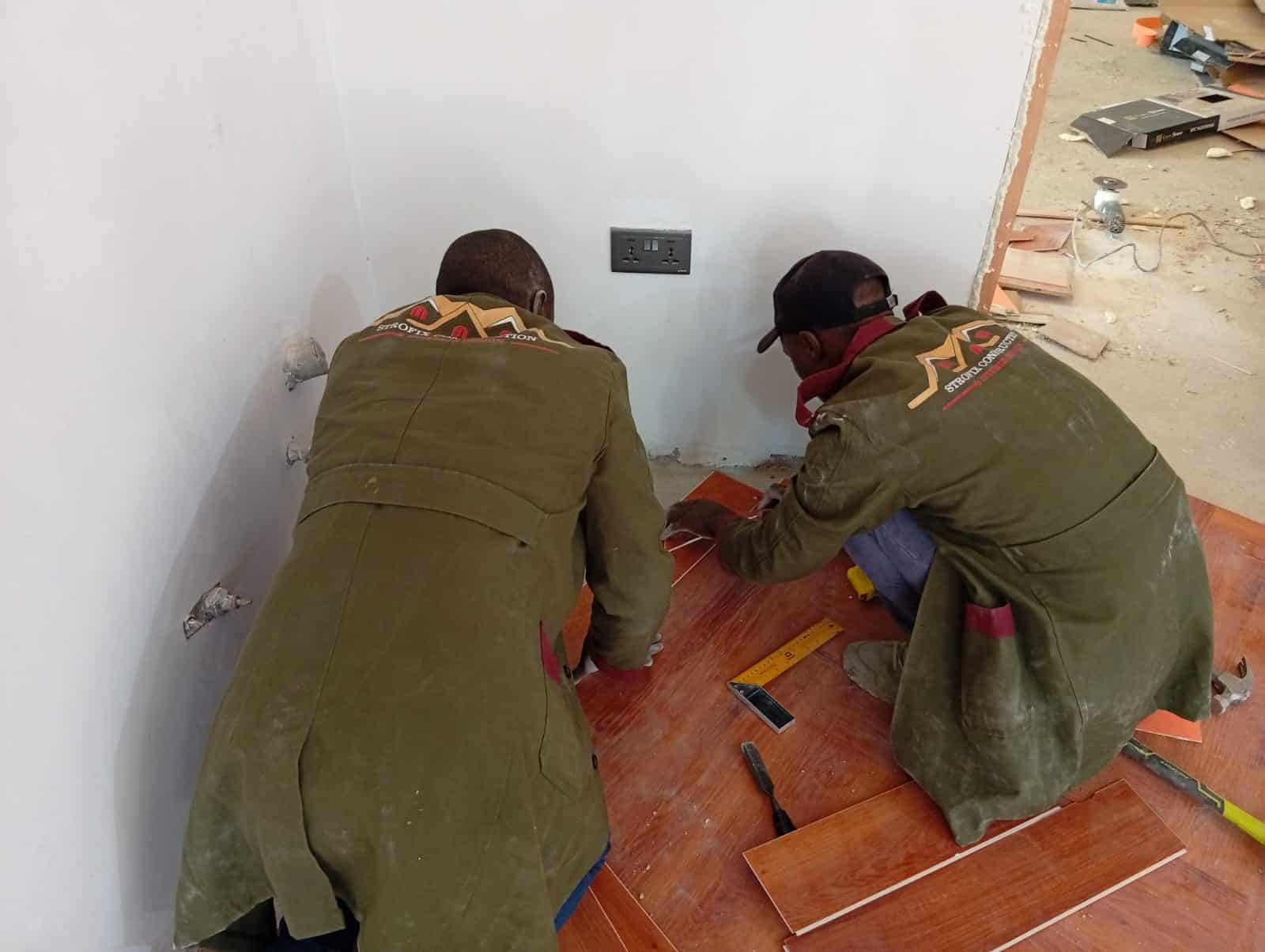 Understanding the timeline of an interior design project in Kenya helps homeowners and developers plan move-in dates and budgets accurately.
Why the Timeline of an Interior Design Project in Kenya Matters
The duration of an interior design project in Kenya affects every connected decision. If you are paying rent on a temporary space, every extra week costs money. If you are completing a commercial fit-out, delays push back your opening date. If you are a developer, project duration determines when units go to market and when rental income begins.
Timeline expectations also affect quality. Projects rushed under unrealistic schedules produce poor results like wrong installations, rework, and avoidable cost increases. A realistic, well-managed timeline for your interior design project in Kenya is not just a planning convenience; it is the foundation of a result that looks exactly the way you intended.
Strofix Tip: The single most effective action to shorten any interior design project in Kenya is to finalise all material selections before site work begins. Late decisions on flooring, ceilings, kitchens, and paint colours are the number one cause of avoidable delays.
How Long Does an Interior Design Project Take in Kenya , Quick Reference
The table below gives realistic timeframes for common project types, assuming materials are pre-selected and the client approves decisions promptly.
| Interior Design Project in Kenya | Typical Duration | Key Variables |
|---|---|---|
| Single room — SPC flooring or ceiling only | 1 – 3 days | Room size, design complexity, subfloor condition |
| Single room full fit-out (floor + ceiling + paint) | 1 – 2 weeks | Ceiling design, drying time, material availability |
| Kitchen installation | 2 – 4 weeks on site + 2–4 weeks fabrication | Cabinet lead time, tiling, plumbing |
| Full apartment (2–3 bedrooms) | 4 – 8 weeks | Scope of work, number of trades, material delivery |
| Full 3–4 bedroom home | 8 – 14 weeks | Custom joinery lead times, subfloor prep, decision speed |
| Commercial office fit-out (100–200 m²) | 4 – 10 weeks | Partitioning, ceiling, flooring, electrical finishing |
| Large commercial or hospitality project | 3 – 6 months+ | Multiple floors, imported materials, complex coordination |
Stage by Stage Timeline of an Interior Design Project in Kenya
Every interior design project in Kenya follows the same general phases. Walking through each one is the clearest way to understand where time is spent and where delays tend to occur.
Stage 1 — Consultation and Site Assessment (1–2 Weeks)
 The consultation and site assessment stage of an interior design project in Kenya sets the scope, timeline, and budget before any installation begins.
Every interior design project in Kenya begins with a site visit. The contractor takes measurements, assesses subfloor and ceiling conditions, discusses design preferences and budget, and prepares a detailed quotation. A single-room project takes a few days; a full home can take one to two weeks for assessment and sign-off. Late client approval is one of the most consistent causes of delayed project kick-off dates.
Stage 2 — Material Selection and Procurement (1–4 Weeks)
Once scope and budget are agreed, all materials must be selected and ordered , SPC flooring, gypsum board, ceiling accessories, kitchen cabinet materials, paint, tiles, wardrobe fittings, and lighting. Standard materials from Nairobi suppliers are procured in one to two weeks. Custom kitchen cabinets, imported tiles, or bespoke joinery add two to four weeks of fabrication and delivery lead time to any interior design project in Kenya. The best practice is to finalise all selections before on-site installation begins.
Stage 3 — Site Preparation (3–7 Days)
Rooms must be cleared, subfloors levelled and cleaned, ceiling heights confirmed, and electrical rough-in positions agreed. On a well-prepared site this takes three to seven days. Sites with uneven subfloors or moisture issues require additional preparation before the next trade can mobilise.
Stage 4 — Ceiling Installation (3 Days–3 Weeks)
Gypsum ceiling installation is always completed before flooring to prevent dust from damaging floor surfaces. A plain flat ceiling in a standard room takes three to five days to install and paint. A complex designer ceiling with multiple levels and LED cove lighting across a full home can take two to three weeks. Ceiling complexity is one of the most common reasons the installation phase of an interior design project in Kenya runs longer than clients expect , subsequent trades must wait for the ceiling to finish and dry before starting. For ceiling options, visit our pages on Gypsum Ceiling Installation in Kenya and Types of Gypsum Ceiling Designs.
Stage 5 — Flooring Installation (1 Day–2 Weeks)
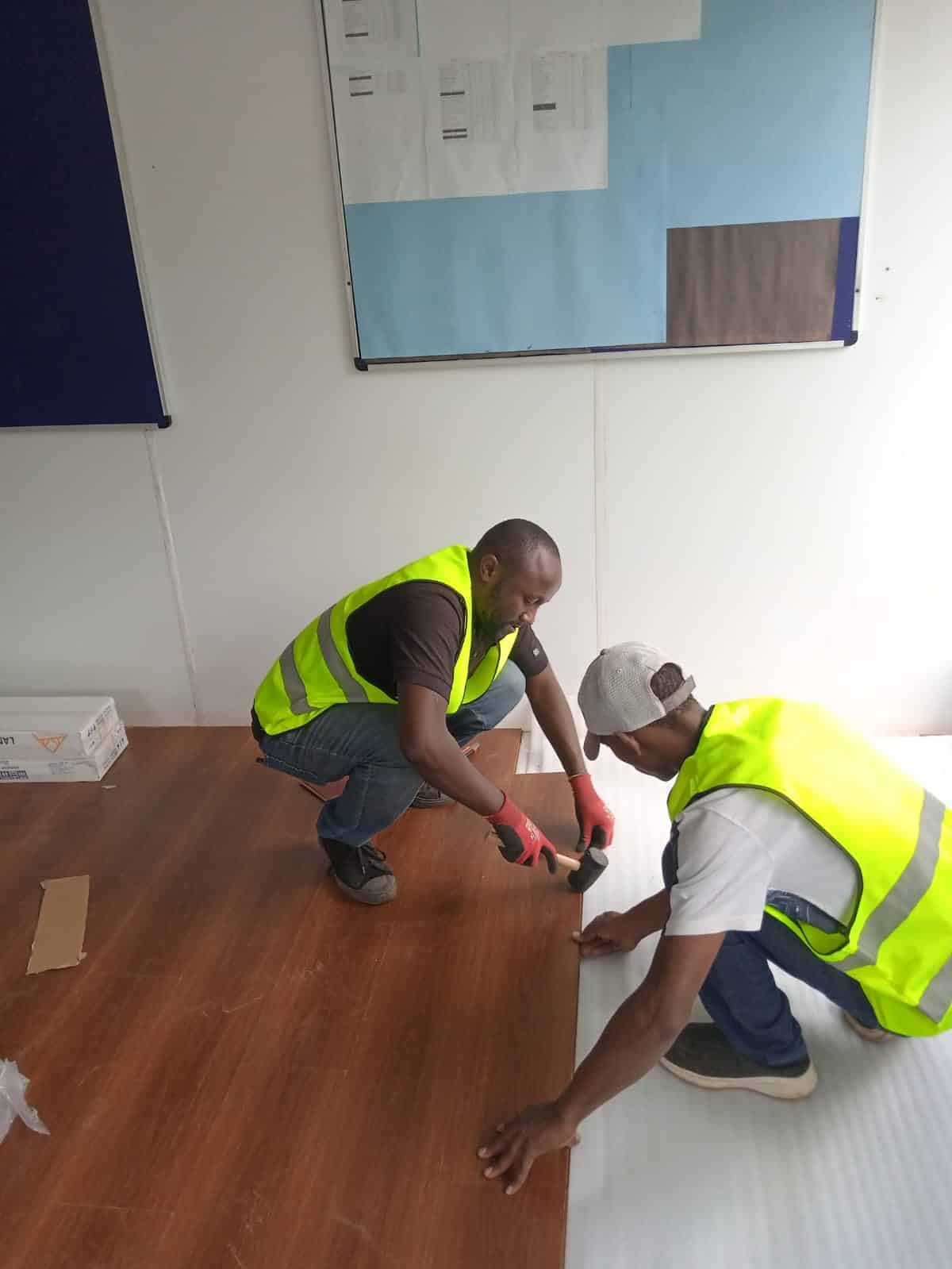 SPC flooring installation is the fastest flooring trade on any interior design project in Kenya , a single room typically completed in one day.
SPC flooring is one of the fastest stages of an interior design project in Kenya. A single bedroom can be floored in one day; a full three bedroom apartment in three to five days on a prepared subfloor. Ceramic and porcelain tile installations take longer because grouting requires 24–48 hours of curing per layer. A fully tiled home adds one to two weeks to the flooring phase. Subfloor condition is the biggest variable , flat, clean, dry concrete allows SPC click-lock installation to proceed rapidly, while subfloors that need levelling add preparation days before any planks can be laid. For full details, visit our SPC Flooring Installation Services in Kenya page.
Stage 6 — Kitchen and Wardrobe Installation (1–4 Weeks)
Kitchen and wardrobe installation is the most time-intensive fitting stage of any interior design project in Kenya. Kitchen work involves assembling upper and lower units, installing the countertop, tiling the backsplash, connecting plumbing, and fitting hardware , one to two weeks on site. Cabinets must be fabricated first, taking two to four weeks from design confirmation. Clients who order late almost always end up with delayed completion dates. Fitted wardrobes take three to seven days per room depending on complexity For full details, visit our page.
Stage 7 — Wall Finishing and Paint (4–10 Days)
Skim coating, sanding, priming, and two coats of emulsion across a standard three-bedroom home take five to ten days. High humidity during Nairobi’s rainy seasons can extend drying times by one to two days. Textured finishes or wallpaper require additional time beyond standard painting.
Stage 8 — Electrical Finishing, Bathrooms, and Handover (1–2 Weeks)
The final stage brings together the electrician fitting lights and switch plates, the plumber completing bathroom fixtures, and the team installing window dressings. Final touch-ups to ceilings, paint, and floor trims are completed here. On a full interior design project in Kenya, this combined finishing phase takes one to two weeks before handover.
Key Factors That Affect the Timeline of an Interior Design Project in Kenya
Client Decision Speed
How quickly the client makes and sticks to decisions is one of the most underappreciated variables in any interior design project in Kenya. Every delayed material selection or design change forces trades to reschedule. Projects where clients arrive with all selections confirmed consistently finish faster and at lower cost than those where decisions are made reactively as work progresses.
Material Lead Times
Standard materials are readily available from Nairobi suppliers. Custom kitchen cabinets, imported tiles, and bespoke joinery carry lead times of two to six weeks. Planning procurement well before the installation date is the most reliable way to avoid material-driven delays on any interior design project in Kenya.
Site Conditions
Unexpected site conditions are among the most reliable sources of timeline extensions. Uneven subfloors, damp concrete, and hidden structural issues all add time when discovered mid-project. A thorough site assessment before mobilisation identifies most of these conditions in advance so the team can plan accordingly.
How to Keep Your Interior Design Project in Kenya on Schedule
- Finalise all material selections before site work begins. This single action does more to protect the timeline of an interior design project in Kenya than any other decision you can make.
- Pay deposits promptly. Materials cannot be ordered and trades cannot be booked until deposits are received. Late payments cause delayed start dates on projects of every size.
- Order kitchen cabinets on day one. Fabrication takes two to four weeks, so cabinets ordered at project start are ready when needed. Late kitchen orders are the number one reason full-home projects overrun their planned completion date.
- Avoid design changes mid-project. Late changes to ceiling layouts, flooring patterns, or cabinet configurations are the most disruptive source of delays in any interior design project in Kenya.
- Build a time buffer. Add one to two weeks to your target completion date. Minor delays from drying times and finishing touch-ups are normal , a buffer prevents them from pushing back your move-in or opening date.
How Strofix Interiors Manages Interior Design Project Timelines in Kenya
At Strofix Interiors, we understand that project timelines directly affect our clients , their move in dates, rental income, and business opening schedules. We begin every interior design project in Kenya with a clear, stage by stage schedule that sets realistic expectations from day one. We sequence our trades carefully to keep each phase moving efficiently without unnecessary waiting time between teams.
We handle every element of an interior design project in Kenya ; gypsum ceiling installation, SPC and tile flooring, kitchen fabrication and fitting, wardrobe installation, wall finishes, and full residential and commercial fit-outs across Nairobi and Kenya. Visit our pages on Interior Design Services in Kenya, SPC Flooring Installation Services in Kenya, and our Cost of Interior Design in Kenya guide.
Ready to Start Your Interior Design Project in Kenya?
Get a realistic timeline and detailed quotation from Strofix Interiors. We cover gypsum ceilings, SPC flooring, kitchen installation, wardrobes, and complete interior fit-outs for homes, offices, and commercial spaces across Kenya.
FAQs — How Long Does an Interior Design Project Take in Kenya?
How long does a full home interior design project take in Kenya?
A complete interior fit-out for a three to four-bedroom home , covering ceilings, flooring, kitchen, wardrobes, wall finishes, and bathrooms , typically takes eight to fourteen weeks from site mobilisation to handover.
How long does SPC flooring installation take?
SPC flooring is the fastest flooring trade on any interior design project in Kenya. A single room is done in one day; a full three-bedroom apartment in three to five days on a prepared subfloor.
What causes an interior design project in Kenya to overrun its timeline?
The most common causes are late material selection, delayed client approvals, kitchen cabinet fabrication lead times, unexpected site conditions, and late payment of deposits.
How long does kitchen installation take?
On-site kitchen installation takes one to two weeks, but cabinet fabrication takes two to four weeks. The total lead time for the kitchen stage of an interior design project in Kenya is typically three to six weeks from design approval to a fully completed kitchen.
How can I speed up my interior design project in Kenya?
Finalise all material selections before work starts, pay deposits immediately, order kitchen cabinets at the project start date, avoid design changes once installation begins, and work with an experienced contractor who manages trade sequencing efficiently.