A bathroom is one of the smallest rooms in a Kenyan home, yet it is often the most expensive per square metre to get right, and one of the least forgiving of a poor plan. Which tiles actually cope with daily water exposure? Should you go for a walk-in shower or keep the bathtub? And what should a full bathroom design in Kenya realistically cost in 2026? This guide answers all three, whether you are working with an interior designer in Nairobi or planning a bathroom as part of a wider renovation.
Below, we walk through the most popular approaches to bathroom design in Kenya, the materials that hold up best, current cost ranges, and practical ideas for small bathrooms. If you are still deciding how a bathroom fits into a larger renovation budget, our guide to the cost of interior design in Kenya is a useful place to start.
What Makes a Good Bathroom Design in Kenya?
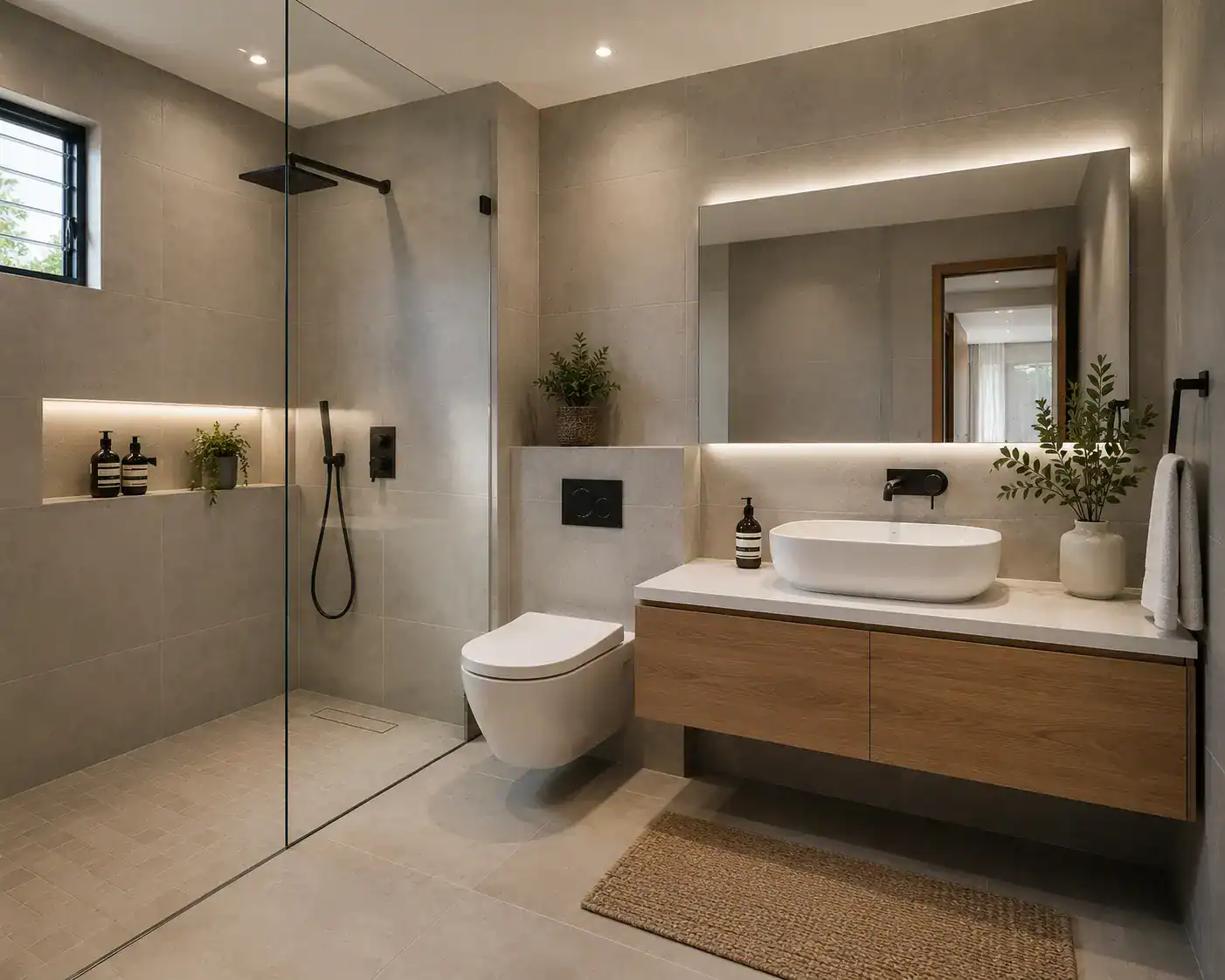
A good bathroom design in Kenya starts with layout and drainage, not tile colour. Before any finish is chosen, the plumbing points, shower area, and ventilation need to work for the room’s actual size and how the household uses it day to day. Once that foundation is right, the design layer, tiles, fittings, lighting, and storage, is what turns a functional bathroom into one that feels considered.
In Kenya specifically, water pressure, borehole or county water quality, and humidity all influence which materials and fittings are worth paying more for. A layout that ignores these local conditions tends to show wear far sooner than one planned around them.
Strofix Tip: Confirm your water source and pressure before choosing fittings. A rain shower head or high-pressure mixer that looks great in a showroom can perform poorly on low mains pressure, so it is worth testing or asking your contractor to size fittings to your actual supply.
Popular Styles for Bathroom Design in Kenya
Most bathroom renovations in Kenyan homes today fall into one of the following styles, each suited to a different budget and taste.
1. Modern Minimalist Bathrooms
This style favours large-format porcelain tiles, a neutral palette, and concealed plumbing fittings for a clean, uncluttered look. It is currently the most requested style in Nairobi apartments and new-build homes because it photographs well and ages neutrally over time.
2. Spa-Style Bathrooms
A spa-style bathroom leans on natural textures, wood-look tiles, stone-effect finishes, and warm lighting to create a calmer, resort-like feel. Rainfall shower heads and freestanding tubs are common features in this style where space allows.
3. Industrial Bathrooms
Exposed concrete-effect tiles, black matte fittings, and open shelving define the industrial look, which suits loft-style apartments and contemporary homes with an existing raw material palette elsewhere in the house.
4. Classic and Traditional Bathrooms
This classic style uses symmetry, patterned floor tiles, and warmer wood-toned vanities, and remain popular in older Nairobi homes being renovated rather than rebuilt from scratch.
5. Compact and Space-Saving Bathrooms
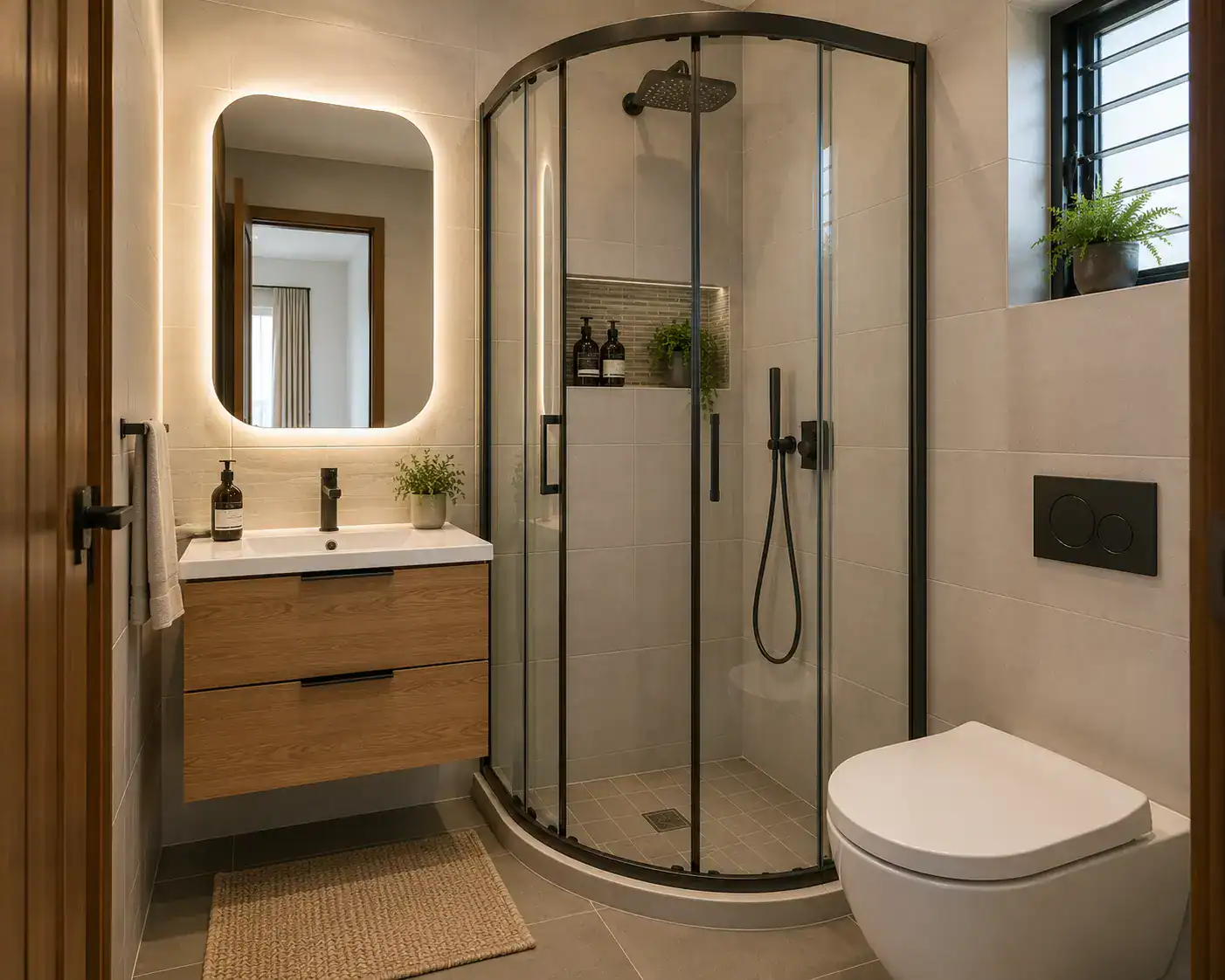
For smaller apartments and en-suites, the priority shifts to wall-mounted vanities, corner showers, and recessed storage that keep the floor area as open as possible without sacrificing function.
Materials and Finishes for Bathroom Design in Kenya
The materials used on the floor, walls, and vanity have the biggest impact on both the cost and the long-term durability of a bathroom in Kenya’s climate.
| Material | Best For | Notes |
|---|---|---|
| Ceramic tiles | Budget to mid-range bathrooms | Affordable and widely available locally, though less durable than porcelain over time |
| Porcelain tiles | Mid to high-range bathrooms, wet areas | Denser and more water-resistant than ceramic, holds colour and finish longer |
| Natural stone (e.g. granite, marble-effect) | High-end, statement bathrooms | Premium look and feel, but needs sealing and more careful maintenance |
| PVC waterproof wall panels | Budget renovations, rental units | Fast to install and fully waterproof, though less premium in appearance than tile |
Many bathrooms in Kenya combine materials, using porcelain tiles on the shower wall and floor with a solid-surface or granite vanity top, which balances cost against durability in the areas that see the most daily water contact. If you are renovating other wet areas of the home at the same time, our guide to SPC flooring installation in Kenya covers a water-resistant option for adjoining spaces.
Cost of Bathroom Design in Kenya (2026)
Bathroom renovation cost in Kenya is generally quoted as a full package covering tiling, plumbing, fittings, and finishing labour, since these elements are rarely priced separately in a realistic quotation. The figures below are indicative market ranges for 2026 and will vary depending on the contractor, tile grade, and fittings specified.
| Bathroom Package | What It Typically Includes | Estimated Cost Range |
|---|---|---|
| Basic refresh | Re-tiling, standard fittings, repainting | KES 150,000 – 300,000 |
| Mid-range renovation | New tiling, vanity unit, shower enclosure, upgraded fittings | KES 300,000 – 600,000 |
| High-end renovation | Porcelain or stone finishes, rainfall shower, custom vanity, feature lighting | KES 600,000 – 1,200,000+ |
These figures are a general market guide rather than a fixed quotation. The only reliable way to know the true cost for your specific space is to request an itemised quotation after a proper interior design consultation, where measurements, plumbing condition, and material choices are confirmed against your exact room.
Factors That Affect Bathroom Renovation Cost
Several variables shape the final cost on any given bathroom project, including:
- Size of the bathroom. A larger floor and wall area requires more tile and labour hours to finish.
- Plumbing condition. Relocating pipework or upgrading old plumbing adds cost beyond a straightforward like-for-like renovation.
- Tile and fitting grade. Ceramic, porcelain, and natural stone sit at different price points, as outlined above, and fitting brand affects cost significantly too.
- Shower type. A glass-enclosed walk-in shower typically costs more than a simple curtain-and-tray setup once glazing and framing are added.
- Waterproofing quality. Proper waterproofing beneath the tile adds cost upfront but prevents far more expensive leak repairs later.
Small Bathroom Design in Kenya: Space-Saving Ideas
Small bathrooms in many Nairobi apartments call for a few specific design choices that make the space feel less cramped without expanding the footprint.
- Choose a walk-in or corner shower over a bathtub. This frees up floor space that a tub would otherwise occupy.
- Use large-format tiles. Fewer grout lines make a small floor or wall area read as more continuous and spacious.
- Install a wall-mounted vanity. Lifting the vanity off the floor opens up sightlines and makes cleaning easier.
- Add a mirror above the full width of the vanity. A wide mirror bounces light around the room and visually doubles the sense of space.
- Keep the tile palette light. Light neutral tiles tend to make a small bathroom feel brighter and larger than a dark, heavy finish.
Common Mistakes to Avoid When Designing a Bathroom
- Skipping proper waterproofing. This is one of the most costly mistakes to fix later, since it usually means removing tile to correct once a leak appears.
- Choosing style over water pressure. A striking fitting that underperforms on your actual water supply becomes a daily frustration rather than a feature.
- Ignoring ventilation. A bathroom without adequate extraction traps moisture, which speeds up grout staining and mould growth.
- Not confirming the tile grade in writing. A quotation that simply says “tiling” without specifying the tile type and size makes it difficult to know exactly what you are paying for.
How Strofix Interiors Designs Bathrooms
At Strofix Construction and Interior Design, every bathroom design in Kenya project starts with a proper assessment of the existing plumbing and layout, not just the finishes on top. We work through tile grade, shower type, and fittings before any quotation is issued, building each renovation around your exact space, water supply, and budget, so you know exactly what you are paying for. For a full overview of everything we design and build, visit our interior design services in Kenya page.
Ready to Design Your Bathroom?
Get in touch with Strofix Construction and Interior Design for a free consultation. We will assess your space, discuss your budget, and provide a clear, itemised quotation for your bathroom design.
FAQs: Bathroom Design in Kenya
How much does it cost to renovate a bathroom in Kenya?
A basic bathroom refresh in Kenya typically costs between KES 150,000 and 300,000, while a mid-range renovation with new tiling, vanity, and shower enclosure runs from KES 300,000 to 600,000. High-end renovations with premium materials can exceed KES 1,200,000.
What is the best bathroom design for a small apartment in Kenya?
For bathroom design in Kenya, a walk-in or corner shower paired with large-format tiles and a wall-mounted vanity is generally the best fit for small apartments, since it frees up floor space and reduces visual clutter compared to a bathtub layout.
What tiles are best for bathrooms in Kenya?
Porcelain tiles are generally the best all-round choice for Kenyan bathrooms, since they are denser and more water-resistant than ceramic tiles. Ceramic remains a solid budget option, while natural stone suits high-end designs that can accommodate the extra sealing and maintenance it needs.
How long does a bathroom renovation take in Kenya?
A standard bathroom renovation in Kenya typically takes two to three weeks from demolition to final finishing, while a full renovation involving plumbing relocation or custom fittings can take four to six weeks depending on the scope and the workshop’s schedule.
Is it worth adding a walk-in shower during a bathroom renovation?
A walk-in shower generally adds more daily convenience and can add resale value compared to a bathtub, particularly in smaller Kenyan apartments where floor space is limited. A bathtub may still be worth keeping in a family home with young children or in a larger master bathroom with room to spare.