Lighting is the finish most Kenyan homeowners plan last and notice first once it is wrong. A living room with beautiful furniture and finishes can still feel flat and uninviting under a single centre-mounted bulb, while a modest room with well-planned lighting design often reads as far more expensive than it actually was to build. This guide covers lighting design for Kenyan homes in full, from the three functional layers of light through to fixture types, ceiling integration, and realistic 2026 costs.
Lighting decisions are easiest to plan alongside the ceiling and electrical layout, since retrofitting recessed or cove lighting after a ceiling is finished is far more disruptive than including it from the start. Our guide to the types of gypsum ceiling designs in Kenya is a useful companion piece if you are still deciding on a ceiling style to pair with your lighting plan.
Why Lighting Design Matters More Than Most Homeowners Expect
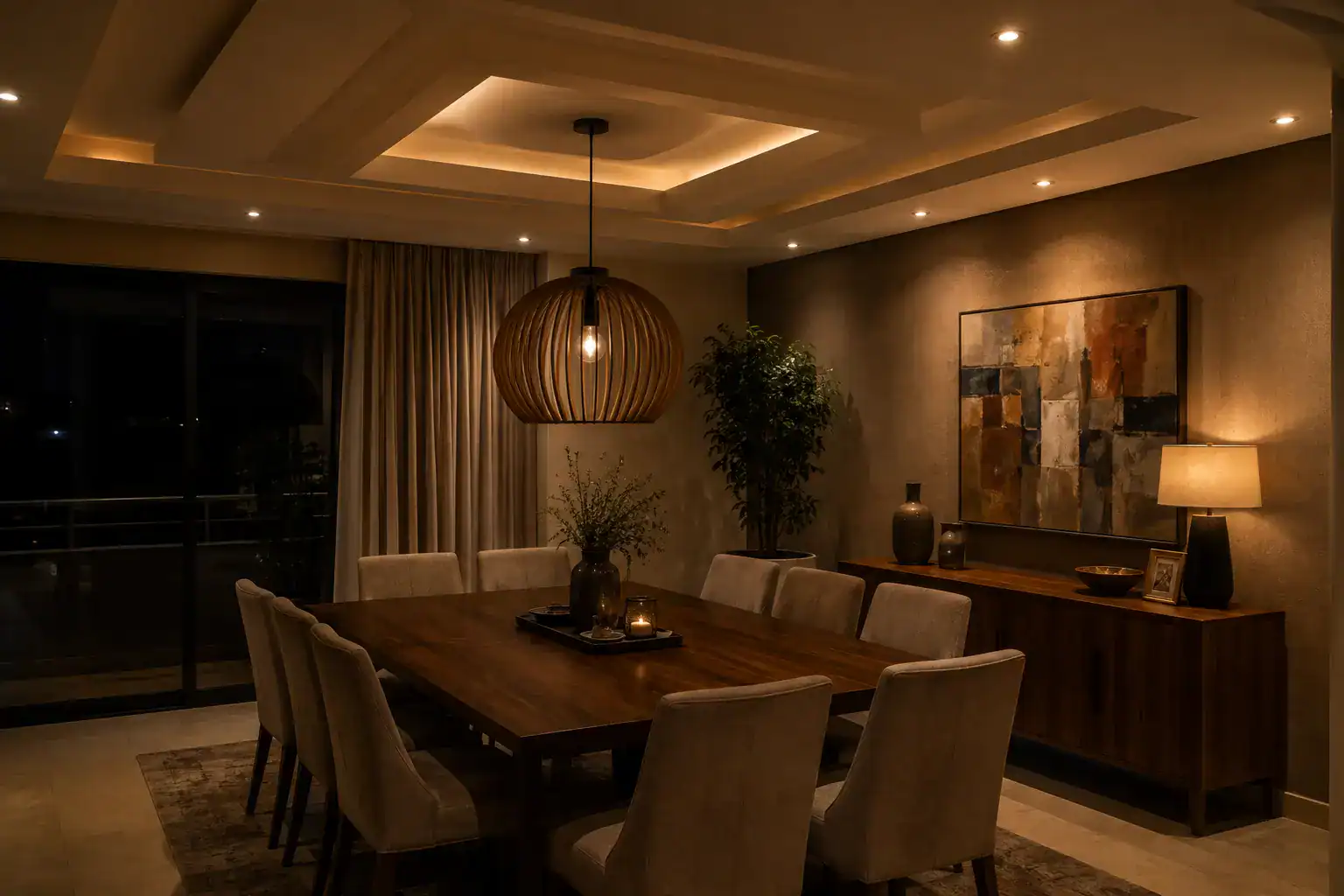
Lighting design for Kenyan homes is frequently treated as a fixture-buying decision made at the very end of a project, when in fact it should be one of the earliest decisions made after the layout is confirmed. Light affects how large a room feels, how accurately colours and finishes read, and how comfortable a space is to actually use in the evening, which in equatorial Kenya covers a significant share of the day given how early it gets dark year-round. A single bright overhead fitting, still the default in many older Kenyan homes, lights a room evenly but flatly, flattening architectural detail and creating harsh shadows under cabinets, shelves, and any furniture that blocks the light path.
Thoughtful lighting design for Kenyan homes solves this by using several light sources at different heights and intensities rather than one dominant source, a principle borrowed from hospitality and retail design where lighting is treated as seriously as any other material finish.
Strofix Tip: Plan your lighting circuits on separate switches for each layer, ambient, task, and accent, rather than one switch controlling every fixture in a room. This lets you dim the overall mood in the evening while keeping task lighting available where you actually need it, such as over a kitchen counter or reading chair.
The Three Layers of Lighting Design
Every well-lit room in professional lighting design for Kenyan homes combines three distinct layers, each serving a different purpose.
1. Ambient Lighting
Ambient lighting is the general, even illumination that lets you move safely through a room and see the space as a whole. Recessed downlights, a flush-mounted ceiling fixture, or cove lighting built into a gypsum ceiling drop all serve this function. Ambient light should be bright enough for general use but is rarely the only layer in a well-designed room.
2. Task Lighting
Task lighting is focused, brighter light aimed at a specific activity, such as under-cabinet strip lighting over a kitchen counter, a desk lamp for reading or working, or pendant lighting positioned directly above a dining table. Without task lighting, ambient light alone often leaves the exact area where detailed work happens under-lit and in shadow.
3. Accent Lighting
Accent lighting draws attention to a specific feature, a piece of art, a textured feature wall, a bookshelf, or an architectural detail, and is typically three to five times brighter than the ambient light around it to create genuine visual contrast. Wall-washer fittings, picture lights, and small directional spotlights are the most common accent lighting tools in Kenyan interiors.
Choosing Light Fixtures by Room
Different rooms in a Kenyan home call for different combinations of the three lighting layers, and getting the balance right room by room is central to good lighting design.
| Room | Primary Layer | Fixture Suggestions |
|---|---|---|
| Living room | Ambient and accent | Recessed downlights, floor lamp, wall-washer for artwork or a feature wall |
| Kitchen | Task | Under-cabinet LED strips, pendant lights over an island or breakfast bar |
| Dining room | Task and accent | A statement pendant or chandelier centred over the table, dimmable |
| Bedroom | Ambient and task | Soft ceiling light, bedside lamps or wall sconces for reading |
| Bathroom | Task | Bright, shadow-free light around the mirror, moisture-rated ceiling fixture |
| Home office | Task | Adjustable desk lamp plus even ambient light to reduce screen glare |
For rooms built around a specific function, our guides on modern kitchen designs for Kenyan homes and dining room design ideas in Kenya go into more detail on lighting placement specific to those spaces, including where pendant lighting works best over an island or table.
LED vs Traditional Lighting in Kenya
Nearly every professional lighting design for Kenyan homes today defaults to LED lighting fixtures, whether for ambient downlights, task lighting, or a statement pendant lighting fixture over a dining table, and the reasons go beyond the up-front price of the bulb.
| Type | Typical Lifespan | Running Cost |
|---|---|---|
| LED | 15,000 – 25,000 hours | Lowest, uses roughly 80% less power than incandescent for the same brightness |
| CFL | 8,000 – 10,000 hours | Moderate, contains mercury and needs careful disposal |
| Incandescent | 1,000 hours | Highest running cost, generates significant heat |
Given Kenya Power’s tiered electricity tariffs, the lower running cost of LED fixtures makes a meaningful difference over a year of daily use, particularly for ambient lighting left on for several hours each evening. LED fixtures are also available in a wide range of colour temperatures, warm white for living and bedroom spaces, cooler daylight tones for kitchens and workspaces, which gives far more control over mood than older lighting technology allowed.
Integrating Lighting Into Your Ceiling Design
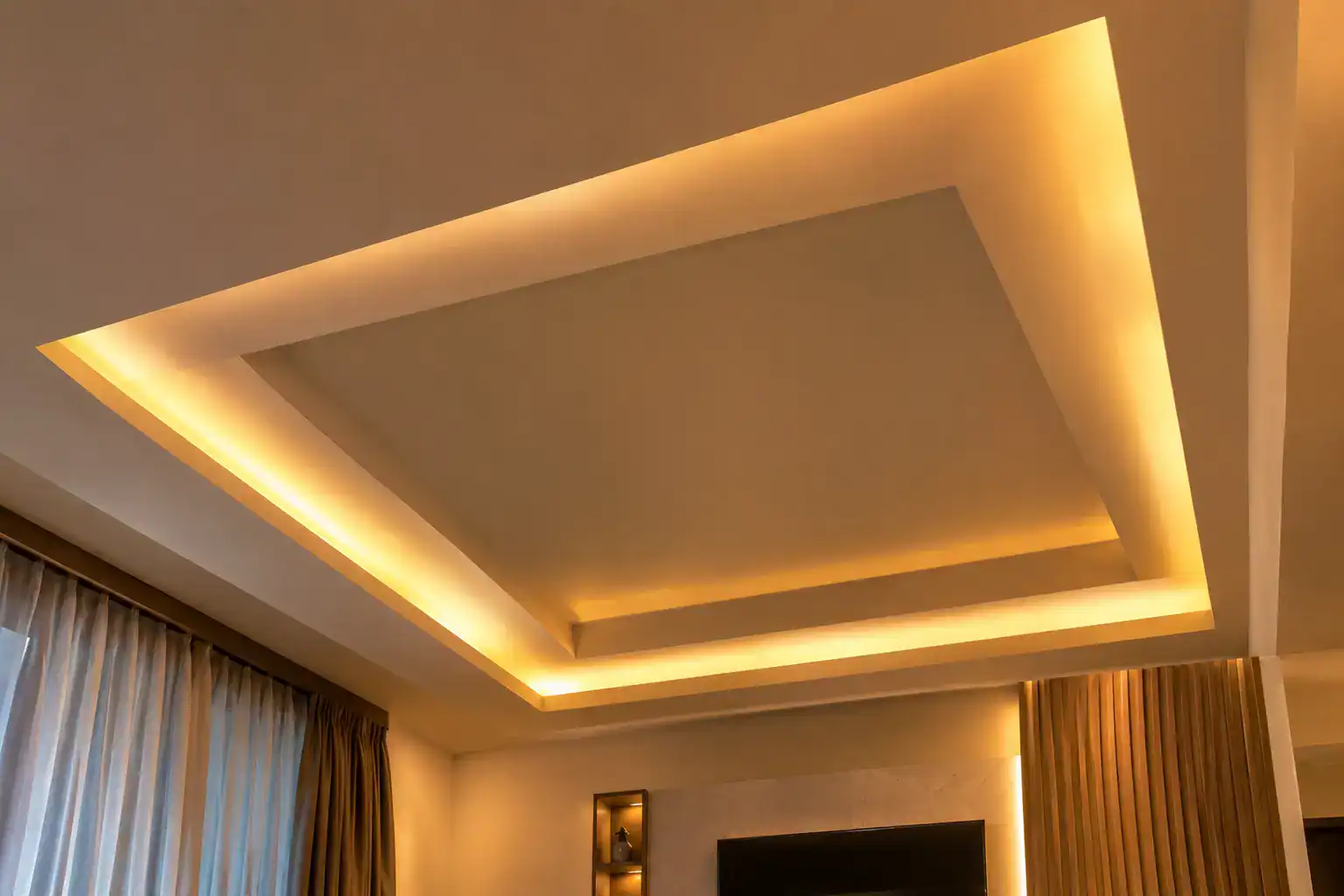
The ceiling and the lighting plan should be designed together rather than in sequence, since the position of a gypsum ceiling drop, cove, or bulkhead determines exactly where recessed or cove lighting can be installed. A stepped gypsum ceiling with a cove around the perimeter creates a soft, indirect ambient glow that a flat ceiling with downlights alone cannot replicate, while a flat ceiling keeps the lighting plan simpler and more budget-friendly. Deciding on ceiling and lighting together, rather than adding lighting as an afterthought once the ceiling contractor has already finished, is one of the most valuable pieces of advice in any lighting design for Kenyan homes.
Common Lighting Design Mistakes to Avoid
Even a well-furnished room can fall flat if a few recurring mistakes in lighting design for Kenyan homes go unnoticed until after the wiring is finished.
- Relying on a single central fixture. One bright bulb in the middle of the ceiling lights the room evenly but flatly, with no depth or mood control.
- Choosing the wrong colour temperature for the room. Cool daylight-toned bulbs in a living room or bedroom can feel clinical rather than comfortable, while overly warm light in a kitchen makes food prep harder to see clearly.
- Skipping dimmers. A dimmable circuit is inexpensive to add during construction and gives far more flexibility than fixed-brightness lighting once the room is finished.
- Forgetting task lighting in work areas. Kitchen counters, desks, and reading corners need their own dedicated light source separate from general ambient lighting.
- Finalising the lighting plan after the ceiling is built. Wiring for recessed or cove lighting is far cheaper and cleaner to install before the ceiling is closed up than after.
Cost of Lighting Design and Installation in Kenya (2026)
Budget is one of the most practical constraints shaping lighting design for Kenyan homes, and costs vary widely depending on fixture quality, the complexity of the wiring plan, and whether the lighting is integrated into a gypsum ceiling. The figures below are indicative 2026 market ranges.
| Item | Typical Range |
|---|---|
| LED downlight, supplied and fitted | KES 1,200 – 3,500 per point |
| Pendant or chandelier fixture (mid-range) | KES 8,000 – 45,000 per fixture |
| LED strip or cove lighting (per metre, fitted) | KES 1,500 – 3,000 |
| Full room lighting plan (design, wiring, fixtures) | KES 40,000 – 150,000+ per room |
These figures are a general market guide rather than a fixed quotation, since the final cost depends heavily on ceiling type, the number of circuits, and fixture selection. If lighting is part of a larger renovation, our guide to the cost of interior design in Kenya shows how it fits into an overall project budget, and a proper interior design consultation is the most reliable way to get an accurate figure for your specific home.
How Strofix Interiors Approaches Lighting Design
At Strofix Construction and Interior Design, lighting is planned alongside the ceiling, electrical, and layout decisions from the start of every project rather than treated as a final touch. We design each room around the three functional layers of light, ambient, task, and accent, so that the finished space is comfortable to live in and looks considered rather than simply well-furnished. For a full overview of everything we design and build, visit our interior design services in Kenya page, or see our bedroom design in Kenya guide for lighting ideas specific to a bedroom.
Ready to Plan Your Lighting?
Get in touch with Strofix Construction and Interior Design for a free consultation. We will assess your space, plan your lighting layers alongside your ceiling design, and provide a clear, itemised quotation.
FAQs: Lighting Design for Kenyan Homes
What are the three types of lighting used in interior design?
The three layers are ambient lighting, which provides general illumination, task lighting, which is focused light for specific activities like cooking or reading, and accent lighting, which highlights a feature such as artwork or a textured wall. Good lighting design for Kenyan homes combines all three rather than relying on one.
Is LED lighting better than CFL or incandescent for Kenyan homes?
Yes, LED lighting is generally the better choice for lighting design for Kenyan homes because it lasts significantly longer, uses roughly 80% less power than incandescent bulbs for the same brightness, and is available in a wide range of colour temperatures for different rooms.
How much does lighting design and installation cost in Kenya?
Individual LED downlights typically cost KES 1,200 to KES 3,500 per point supplied and fitted, while a full room lighting plan covering design, wiring, and fixtures ranges from KES 40,000 to KES 150,000 or more depending on complexity.
Should lighting be planned before or after the ceiling design?
Lighting should be planned alongside or before the ceiling design, not after. Wiring for recessed downlights or cove lighting needs to be positioned before a gypsum ceiling is closed up, since retrofitting lighting into a finished ceiling is far more disruptive and costly.
What colour temperature of light is best for a Kenyan living room?
A warm white colour temperature, generally between 2700K and 3000K, is best for living rooms and bedrooms since it creates a comfortable, inviting atmosphere. Cooler daylight tones above 4000K are better suited to kitchens, home offices, and bathrooms where task visibility matters more than mood.