
A built-in wardrobe is one of the highest-value additions you can make to a bedroom in Kenya, but it is also one of the easiest to get wrong if you do not know what to ask for. What door type suits a small room? What material actually holds up in Nairobi’s humidity? And how much should a fitted wardrobe design in Kenya realistically cost in 2026? This guide answers all three, whether you are working with an interior designer in Nairobi or planning a wardrobe as part of a wider renovation.
Below, we walk through the main types of custom wardrobe designs available in Kenya, the materials used, current cost ranges, and practical ideas for small bedrooms. If you are still deciding how a wardrobe fits into a larger room plan, our guide to the cost of interior design in Kenya is a useful place to start.
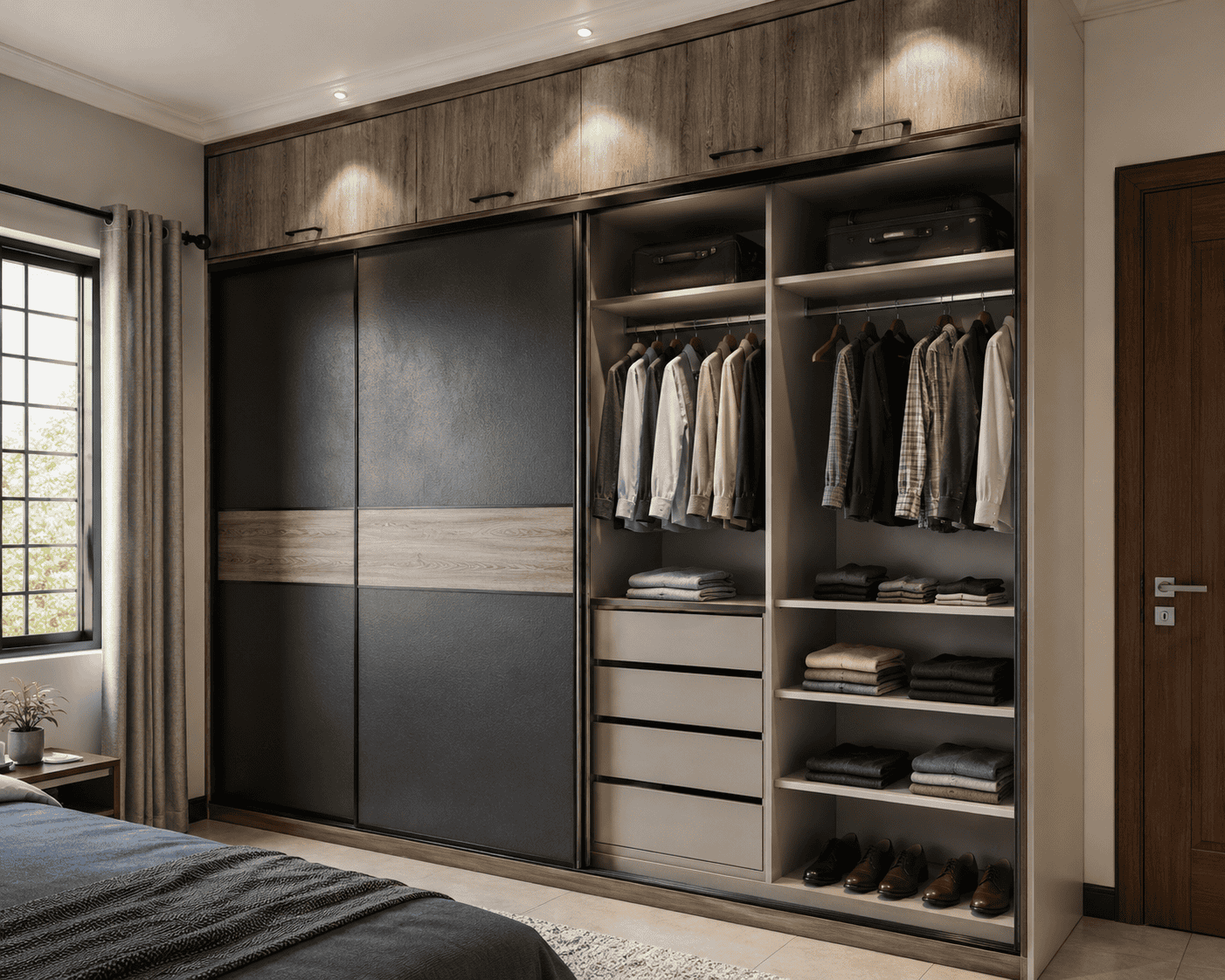
What Is a Built-In Wardrobe?
A built-in wardrobe is a storage unit constructed directly into a room’s wall or alcove, floor to ceiling, rather than a free-standing piece of furniture that can be moved. In Kenya, these units are typically designed and fitted by an interior design or carpentry team on-site, using measurements taken from the exact room, which allows the design to use the full available space, including awkward corners, sloped ceilings, or gaps beside a window.
Because a custom wardrobe is built specifically for your room, it tends to cost more upfront than a ready-made unit bought off the shelf, but it makes far better use of space and generally adds more resale value to a home.
Strofix Tip: Before choosing a door style or finish, measure the full wall width available and note the position of any windows, switches, or sloped sections. A wardrobe design that is planned around these fixed points from day one will always look more intentional than one that has to work around them later.
Types of Built-In Wardrobe Designs in Kenya
Most fitted wardrobes in Kenyan homes fall into one of the following categories, each suited to a different room size and budget.
1. Hinged (Swing) Door Wardrobes
This is the most common wardrobe design in Kenya, using standard hinged doors that swing open like a cupboard. Hinged doors are generally the most affordable option and are easy to source and repair locally, but they need enough floor clearance in front of the wardrobe to open fully, which makes them less suited to very small bedrooms.
2. Sliding Door Wardrobes
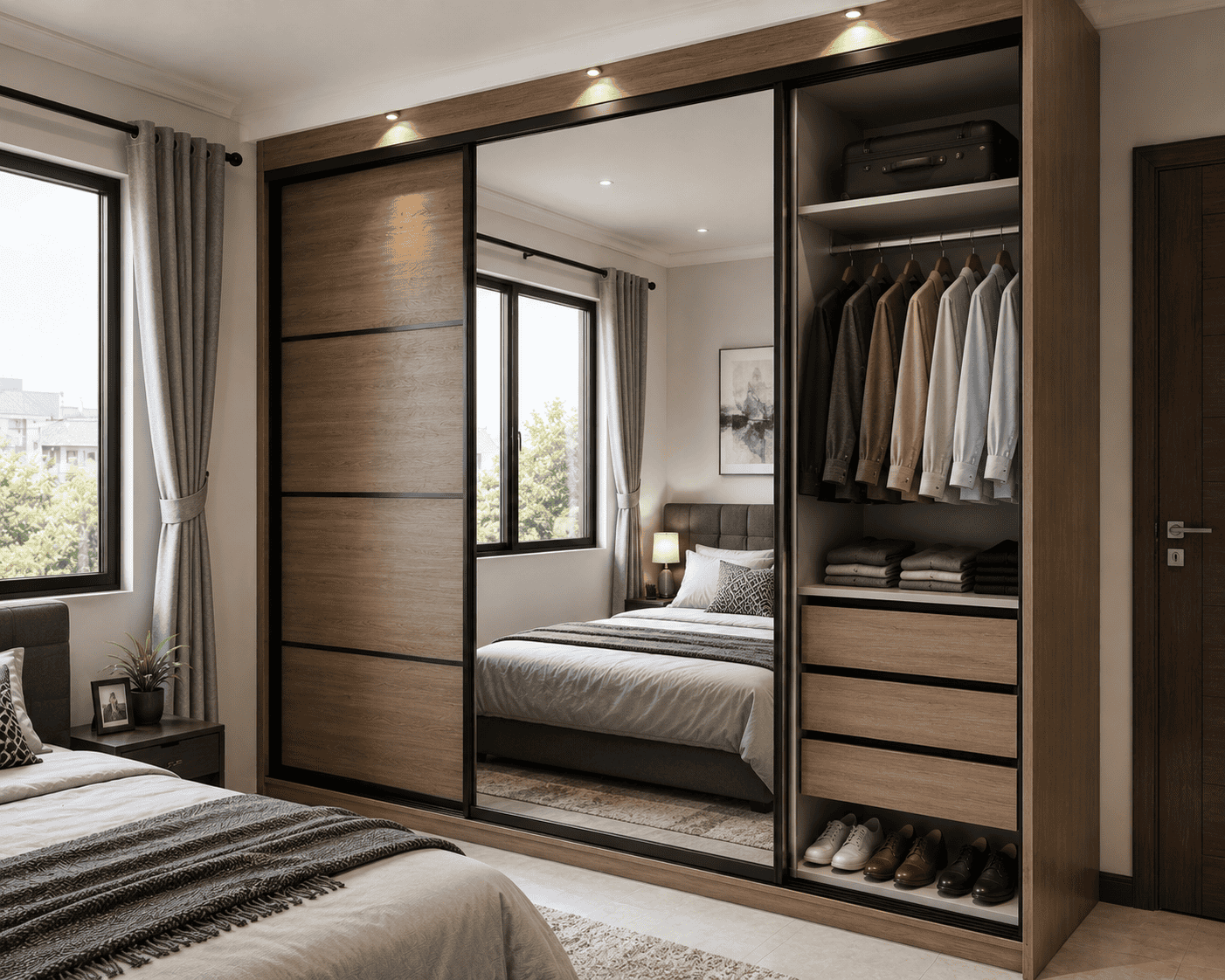
Sliding doors run along a top and bottom track instead of swinging outward, which makes them the better choice for smaller bedrooms or rooms where a bed or other furniture sits close to the wardrobe. They also give a cleaner, more modern look, especially when finished in mirror or high-gloss panels, though the track hardware typically pushes the cost slightly above a comparable hinged design.
3. Walk-In Wardrobes
A walk-in wardrobe is a dedicated small room or wide alcove fitted with open shelving, hanging rails, and drawers on more than one side, rather than a single wall unit with doors. This design needs the most space and the largest budget of the options here, but it offers by far the most storage and the easiest daily access, and is increasingly requested in newer Nairobi apartments and master bedrooms.
4. Open Wardrobes and Shelving Units
An open wardrobe skips doors altogether in favour of open shelving, cubbies, and a hanging rail, sometimes paired with fabric curtains for a softer look. This is the most budget-friendly built-in option and works well in a minimalist bedroom, though it does require more discipline to keep tidy since everything inside is on permanent display.
5. Corner Wardrobes
A corner wardrobe is designed to fit into an internal corner of a room, using an L-shaped or angled carcass to make use of a corner that would otherwise be wasted space. This is a practical solution for oddly shaped bedrooms or rooms where a full wall is not available for a standard straight-run wardrobe.
Materials Used for Built-In Wardrobes in Kenya
The material used for the wardrobe carcass and doors has the biggest single impact on both the price and the durability of the finished unit.
| Material | Best For | Notes |
|---|---|---|
| Melamine-faced board (MFB) | Budget to mid-range wardrobes | Affordable, wide colour range, but less durable than MDF or solid wood over time |
| MDF (Medium Density Fibreboard) | Mid-range wardrobes, painted finishes | Smooth, paint-friendly surface; needs a sealed edge to resist moisture |
| Plywood | Mid to high-range wardrobes | Stronger and more moisture-resistant than MDF, often used for carcass construction |
| Solid wood (e.g. mahogany, cypress) | High-end, statement wardrobes | Most durable and premium finish, but the most expensive and heaviest option |
Many wardrobes built in Kenya today combine materials, using a plywood or MDF carcass with melamine or laminate doors, which balances durability against cost. If you are also renovating a kitchen alongside a bedroom, the same material logic applies, and our guide to types of kitchen cabinet designs in Kenya covers this in more detail.
Cost of Built-In Wardrobe Design in Kenya (2026)
Wardrobe cost in Kenya is generally quoted per linear metre (also called per running foot in some quotations), since this reflects the actual amount of carcass, doors, and internal fittings required. The figures below are indicative market ranges for 2026 and will vary depending on the contractor, finish, and hardware specified.
| Wardrobe Type | Average Cost (per linear metre) | Typical Cost for a 3-Metre Bedroom Run |
|---|---|---|
| Chipboard / melamine wardrobe | KES 18,000 – 30,000 | KES 55,000 – 90,000 |
| MDF wardrobe (hinged or sliding) | KES 30,000 – 55,000 | KES 90,000 – 165,000 |
| Premium lacquer-finish wardrobe | KES 55,000 – 100,000+ | KES 165,000 – 300,000+ |
| Walk-in wardrobe (full room, floor-to-ceiling units) | N/A (quoted per room) | From KES 200,000, upwards of KES 500,000 for larger master suites |
Across the Kenyan market, most fitted wardrobe quotations land somewhere in the KES 15,000 to 35,000 per linear metre range for standard melamine and MDF builds, with sprayed MDF, soft-close hardware, and internal drawers pushing the top end higher. On that basis, a typical 3-metre bedroom wardrobe usually costs between KES 60,000 and KES 250,000 depending on material and internal fittings, while a walk-in layout is priced by the total metres of units built around the room rather than as a single fixed figure.
These figures are a general market guide rather than a fixed quotation. The only reliable way to know the true cost of a wardrobe design for your specific room is to request an itemised quotation after a proper interior design consultation, where measurements, material, and hardware are confirmed against your exact space.
Factors That Affect the Cost of a Built-In Wardrobe
Several variables shape the final wardrobe cost on any given project, including:
- Size and length of the wall. Since pricing is per linear metre, a longer wardrobe run costs proportionally more.
- Material choice. Melamine, MDF, plywood, and solid wood all sit at different price points, as outlined above.
- Door type and hardware. Sliding tracks, soft-close hinges, and mirrored panels all add to the base cost of a hinged, non-mirrored design.
- Internal fittings. Pull-out drawers, shoe racks, tie and belt racks, and internal lighting all increase the price beyond a basic hanging rail and shelf layout.
- Site conditions. Sloped ceilings, uneven walls, or awkward corners often require custom panel cutting, which adds labour time to the project.
Built-In Wardrobe Ideas for Small Bedrooms in Kenya
Small bedrooms in many Nairobi apartments call for a few specific design choices that make a wardrobe feel less like it is competing for space with the rest of the room.
- Choose sliding over hinged doors. This removes the need for floor clearance in front of the wardrobe, which matters most in a compact room.
- Use mirrored door panels. A mirrored sliding door doubles as a full-length mirror and visually opens up a small room.
- Build floor to ceiling. Extending the wardrobe fully to the ceiling, rather than leaving a gap above, adds meaningful storage without using any extra floor space.
- Keep the finish light. Light woodgrain or off-white melamine finishes tend to make a small bedroom feel larger than a dark, heavy finish.
- Add a corner or L-shaped run where possible. This uses awkward corners rather than leaving them empty.
How to Choose the Right Wardrobe Design for Your Space
The right wardrobe design depends on the size of the room, how much you need to store, and how the space is used day to day. A single occupant in a small bedroom is usually better served by a compact sliding-door design, while a shared master bedroom with room to spare may justify a walk-in layout with separate hanging and shelving zones for each person. It is worth having this conversation with a designer early, alongside the wider layout of the room, rather than treating the wardrobe as an afterthought once the rest of the space is planned.
Common Mistakes to Avoid When Installing a Built-In Wardrobe
- Choosing hinged doors in a tight room. This is one of the most common regrets homeowners raise once a wardrobe is fitted and there is no longer enough clearance to open the doors fully.
- Skipping internal organisation. A wardrobe with only a single rail and shelf wastes most of its storage potential compared to one planned with drawers, shoe racks, and divided sections.
- Ignoring ceiling height. Stopping a wardrobe short of the ceiling leaves a dust-collecting gap and gives up usable storage space above head height.
- Not confirming the material in writing. A quotation that simply says “wardrobe” without specifying the board material, edge finish, and hardware makes it difficult to know exactly what you are paying for.
How Strofix Interiors Designs Built-In Wardrobes
At Strofix Construction and Interior Design, every wardrobe project starts with an accurate site measurement and a conversation about how the space is actually used, not just how it should look. We work through door type, material, and internal fittings before any quotation is issued, building each custom wardrobe around your exact room and budget, so you know exactly what you are paying for. For a full overview of everything we design and build, visit our interior design services in Kenya page.
Ready to Design Your Built-In Wardrobe?
Get in touch with Strofix Construction and Interior Design for a free consultation. We will measure your space, discuss your budget, and provide a clear, itemised quotation for your wardrobe design.
FAQs: Built-In Wardrobe Design in Kenya
How much does a built-in wardrobe cost in Kenya?
Fitted wardrobes in Kenya are usually priced per linear metre, ranging from around KES 20,000 for a basic melamine hinged-door design to KES 90,000 or more per metre for solid wood. A standard bedroom wardrobe typically costs between KES 60,000 and KES 300,000 depending on size, material, and finish.
What is the best wardrobe design for a small bedroom in Kenya?
Sliding door wardrobes are generally the best fit for small bedrooms in Kenya, since they do not need floor clearance to open like hinged doors do. Mirrored sliding panels also help a small room feel more open.
What material is best for a fitted wardrobe in Kenya?
Melamine-faced board is the most affordable option, MDF offers a smooth paint-ready finish, plywood adds more durability and moisture resistance, and solid wood is the most premium and expensive choice. Many wardrobes combine a plywood or MDF carcass with melamine or laminate doors to balance cost and durability.
How long does it take to install a built-in wardrobe in Kenya?
A standard single-wall fitted wardrobe typically takes one to two weeks from final measurement to installation, while a full walk-in wardrobe or a design with custom internal fittings can take three to four weeks depending on the workshop’s schedule and the complexity of the site.
Is a built-in wardrobe better than a free-standing wardrobe?
A built-in wardrobe generally makes better use of available space, since it is custom-measured to the room, and it tends to add more value to a home than a free-standing unit. A free-standing wardrobe can be cheaper upfront and moved to a new home, which may suit renters or those on a tighter budget.