
Kitchen cabinets take more daily abuse than almost any other surface in a Kenyan home, from cooking grease and steam to constant opening and closing of doors and drawers. Kitchen cabinet maintenance in Kenya is not complicated, but it does need to be consistent, since grease and grime that sit for weeks are far harder to remove than the same buildup wiped away within a day or two. This guide covers cleaning by material type, grease removal, hardware care, common problems, and realistic 2026 repair costs.
If your cabinets are showing more than surface wear, our guide to the types of kitchen cabinet designs in Kenya is a useful place to start when comparing your current setup against newer finish options, and our modern kitchen designs for Kenyan homes guide covers what a fuller kitchen refresh involves.
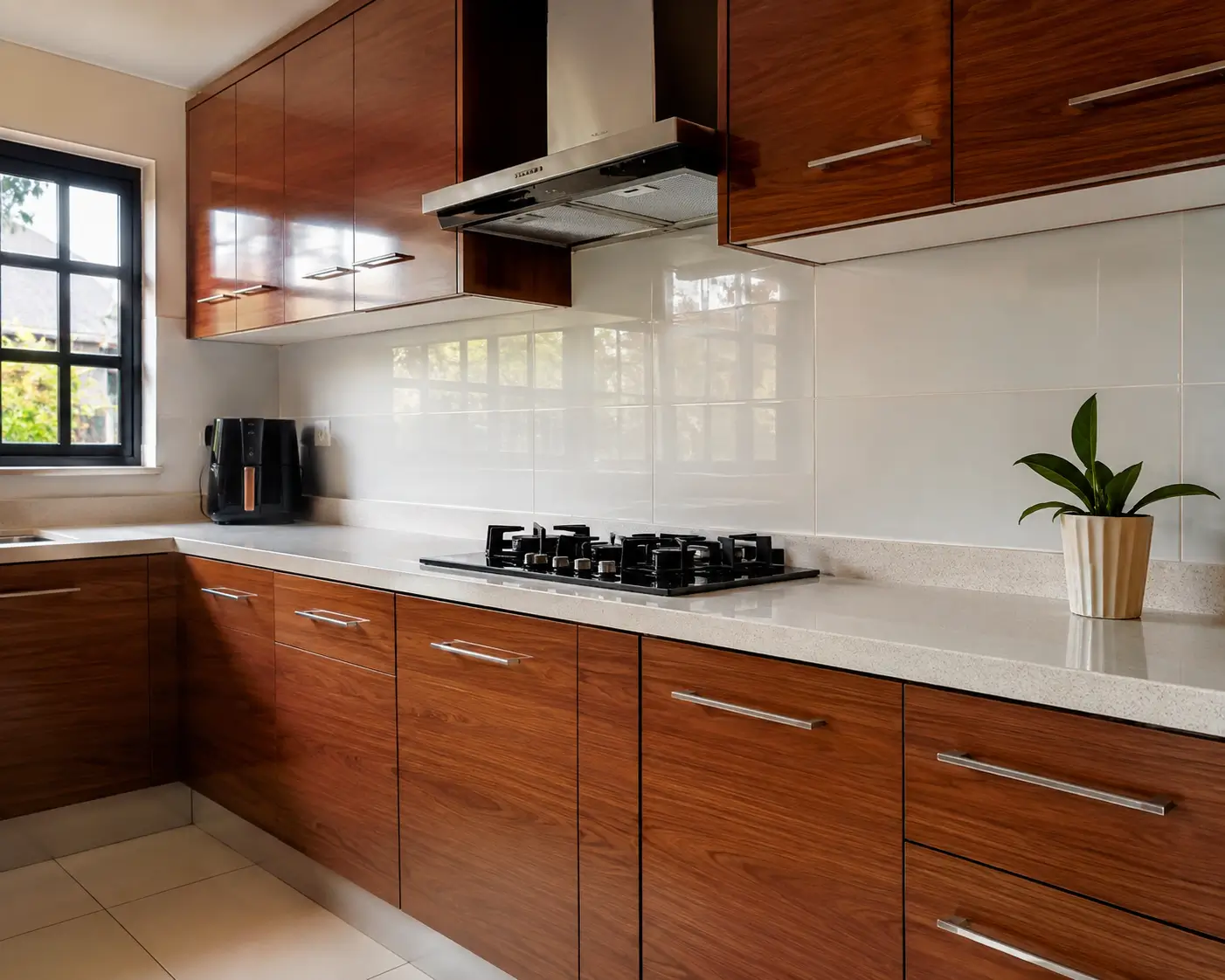
Why Kitchen Cabinet Maintenance Matters in Kenya
Kitchen cabinet maintenance in Kenya matters more than in most other rooms because the kitchen combines heat, steam, cooking oil, and frequent physical contact in a single space, all of which accelerate wear on cabinet surfaces and hardware. Grease that settles on a cabinet door near the cooker gradually attracts dust, forming a sticky film that becomes progressively harder to remove the longer it is left, while unaddressed water splashes around the sink can cause swelling or delamination on MDF cabinets specifically. Hinges and drawer runners that go unlubricated for years eventually sag or stick, which is often mistaken for a manufacturing fault when it is actually a maintenance gap.
The good news is that kitchen cabinet maintenance in Kenya is largely about consistency rather than intensity. A short wipe-down after cooking, combined with proper grease removal every few weeks, prevents almost all of the common problems that eventually require a professional repair or refinish.
Strofix Tip: Keep a microfibre cloth and a small spray bottle of diluted dish soap solution in a kitchen drawer specifically for cabinet wipe-downs. Cleaning grease splashes the same day they happen, rather than waiting for a weekly deep clean, is the single most effective habit in kitchen cabinet maintenance.
Routine Cleaning by Cabinet Material
How to clean kitchen cabinets properly depends significantly on the material and finish, since a method that is safe for lacquered plywood can damage a raw or oiled hardwood surface. Kitchen cabinet cleaning tips also vary by how close a cabinet sits to the cooker or sink, since these zones need more frequent attention than cabinets further from heat and water.
- MDF with melamine or laminate finish. Wipe with a soft cloth and a mild soap solution, then dry immediately. Avoid soaking the surface or leaving standing water near seams and edges, where MDF is most vulnerable to swelling.
- Marine plywood with lacquered finish. Clean with a soft, slightly damp microfibre cloth and a pH-neutral cleaner. Avoid ammonia-based or abrasive cleaners, which can dull a lacquered sheen over time.
- Solid hardwood. Use a wood-safe cleaner or a barely damp cloth followed by a dry cloth, and apply a wood conditioner or polish every few months to prevent the timber from drying out and cracking.
- Handleless or matte finishes. These show fingerprints and smudges more visibly than gloss finishes, so a quick daily wipe near handle points keeps the surface looking consistent.
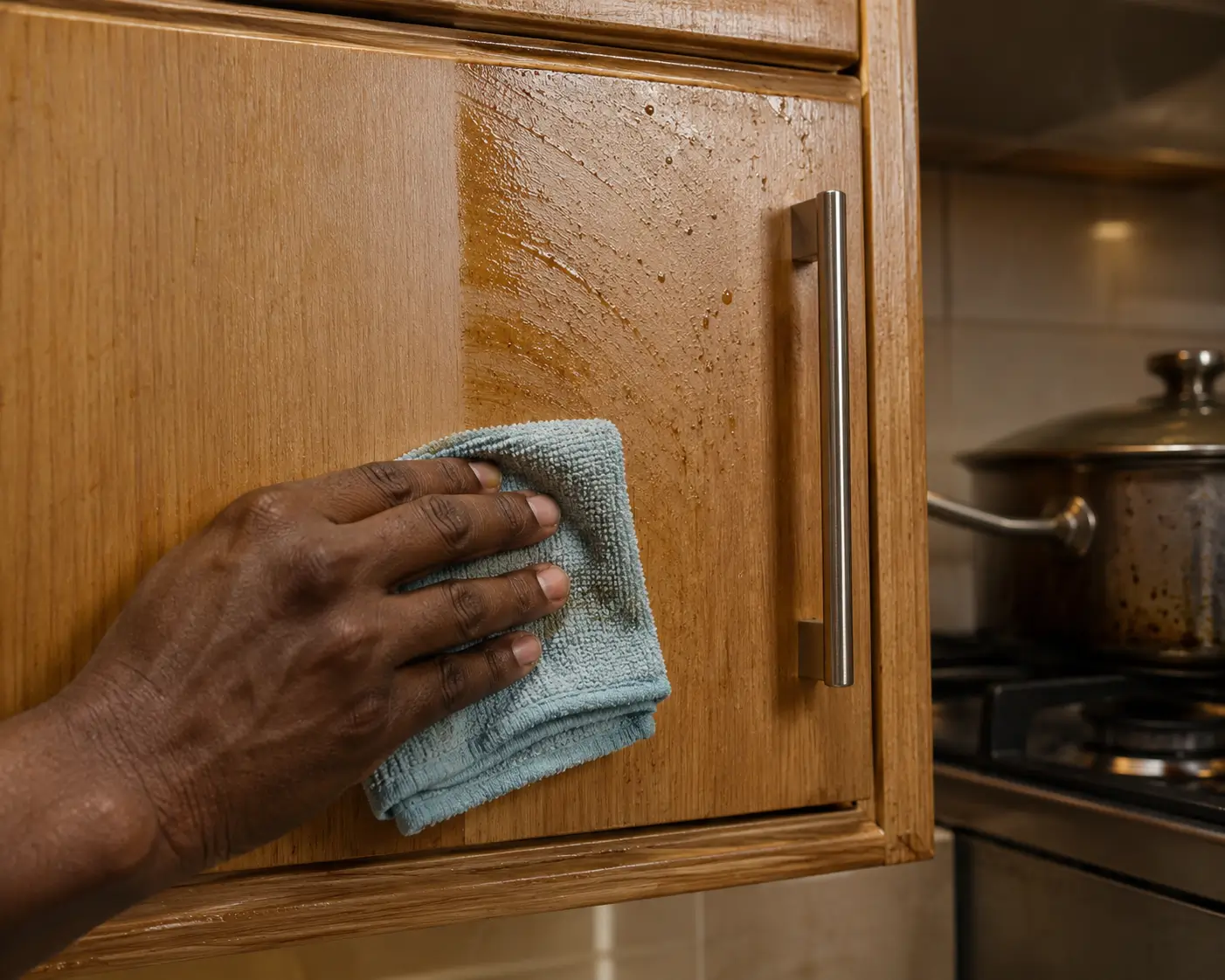
Removing Grease and Grime Buildup
Grease is the single biggest maintenance challenge for kitchen cabinets in Kenya, particularly for cabinets positioned near the cooker or hob. For light daily buildup, a warm water and mild dish soap solution applied with a soft cloth is usually sufficient. For heavier, older grease deposits, a paste of baking soda and water left on the surface for a few minutes before wiping breaks down the buildup without scratching most cabinet finishes. Whatever cleaning method is used, the surface should always be dried immediately afterward, since leftover moisture is what causes long-term damage rather than the cleaning process itself.
A cooker hood or extractor fan that is cleaned and functioning correctly significantly reduces how much grease reaches nearby cabinets in the first place, which makes hood maintenance an indirect but genuinely effective form of kitchen cabinet maintenance in Kenya.
Protecting Cabinets From Moisture and Heat
Cabinets closest to the sink and cooker face the highest risk of moisture and heat damage, so a few habits make a meaningful difference over time. Wiping up water splashes around the sink cabinet immediately, rather than letting them air dry, prevents the slow swelling that eventually causes MDF doors to warp at the edges. Placing a heat-resistant mat or trivet between hot pots and any cabinet or countertop surface protects lacquered and laminate finishes from scorching or discolouration. In humid periods, particularly during the long and short rains, leaving cabinet doors slightly ajar overnight helps interior shelving air out and reduces the risk of a musty smell developing inside enclosed cabinets.
Common Kitchen Cabinet Problems and How to Fix Them
| Problem | Likely Cause | Recommended Fix |
|---|---|---|
| Swollen or delaminating door edges | Standing water near the sink or a leaking pipe underneath | Fix the water source first, allow the area to dry fully, then replace the affected door or edge banding |
| Sagging or misaligned doors | Worn or loosened hinges from years of daily use | Adjust or replace the hinges, a straightforward repair that restores alignment without replacing the door |
| Sticky or slow-closing drawers | Dust and grease buildup on the drawer runner track | Clean the runner track thoroughly and apply a small amount of silicone-based lubricant |
| Dull or hazy lacquer finish | Abrasive cleaning products or accumulated grease film | Deep clean with a pH-neutral cleaner, and consider a professional re-lacquer if dullness persists |
| Loose handles or knobs | Screws working loose from repeated daily use | Tighten or replace the screws, using a slightly larger screw or wood filler if the hole has worn out |
Hardware Maintenance: Hinges, Handles, and Runners
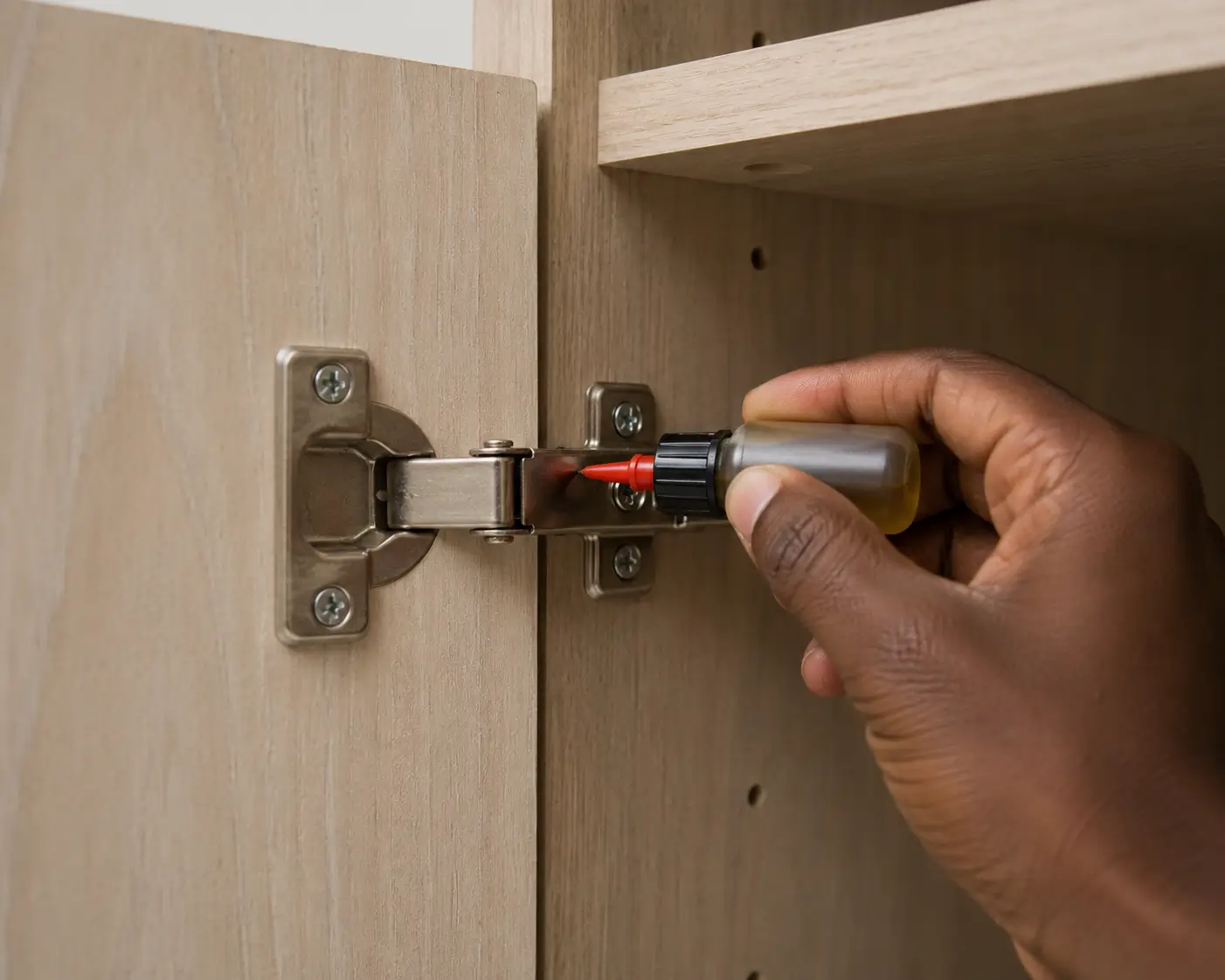
Hardware is the part of kitchen cabinet maintenance in Kenya most often overlooked, yet it fails faster than the cabinet carcass or doors themselves under normal daily use. Soft-close hinges and drawer runners benefit from a small amount of silicone-based lubricant every six months, applied sparingly to avoid attracting more dust. Handles and knobs should be checked periodically for loose screws, since a handle that wobbles for months eventually strips the screw hole and requires a more involved repair than simply retightening it early. Good hardware care is often the single most neglected part of kitchen cabinet maintenance in Kenya, despite being the cheapest to keep on top of.
DIY Maintenance or Call a Professional?
Routine kitchen cabinet maintenance in Kenya, wiping, grease removal, and hardware tightening, is reasonable for most homeowners to handle without help, and knowing how to clean kitchen cabinets properly covers most of what a unit needs day to day. Kitchen cabinet repair in Kenya involving swollen doors, delamination, structural sagging in the carcass, or a finish that needs stripping and refinishing should go to a professional, since these repairs usually require matching the original material and finish precisely to avoid a visible patch. Attempting a DIY refinish on a lacquered or laminate surface without the right products often leaves an uneven sheen that is more noticeable than the original damage.
Cost of Kitchen Cabinet Repair in Kenya (2026)
Repair costs depend heavily on the extent of the damage and the cabinet material, and repairs are usually far cheaper than replacement when kitchen cabinet maintenance in Kenya has kept the underlying carcass in good condition. The figures below are indicative 2026 market ranges.
| Repair Type | Typical Scope | Estimated Cost |
|---|---|---|
| Hinge or handle replacement | Per unit, hardware and labour | KES 500 – 2,500 |
| Drawer runner replacement | Per drawer, hardware and labour | KES 1,500 – 4,000 |
| Single door replacement | New door matched to existing finish | KES 4,500 – 12,000 |
| Water damage repair (localised) | Replacing a swollen or delaminated section | KES 8,000 – 25,000 |
| Full re-lacquer or refinish (per kitchen) | Stripping and refinishing all cabinet doors | KES 35,000 – 90,000+ |
These figures are a general market guide rather than a fixed quotation. If your cabinets need more than a repair, our guide to the interior design consultation process explains how we assess a kitchen before recommending repair versus replacement.
How Strofix Interiors Supports Kitchen Cabinet Maintenance
At Strofix Construction and Interior Design, we treat kitchen cabinet maintenance in Kenya as part of the same relationship as the original installation, offering repairs, hardware servicing, and refinishing for cabinets we have built as well as existing kitchens we did not originally install. Every repair starts with identifying the actual cause of the damage, whether that is a leaking pipe, worn hardware, or finish wear, so the same problem does not return shortly after the fix. For a full overview of everything we design and build, visit our interior design services in Kenya page.
Need Help With Your Kitchen Cabinets?
Get in touch with Strofix Construction and Interior Design for a free inspection. We will identify the cause of any damage or wear and provide a clear, itemised quotation for the repair.
FAQs: How to Maintain Kitchen Cabinets in Kenya
How often should kitchen cabinets be cleaned in Kenya?
Cabinets near the cooker should be wiped down after cooking whenever grease splashes occur, with a more thorough clean of all cabinet surfaces every one to two weeks to prevent buildup from settling and becoming harder to remove.
What is the best way to clean grease off kitchen cabinets?
Knowing how to clean kitchen cabinets with grease buildup comes down to two methods: a warm water and mild dish soap solution for light, regular buildup, and a baking soda and water paste left on the surface for a few minutes for heavier, older deposits. The surface should always be dried immediately after cleaning.
How much does kitchen cabinet repair cost in Kenya?
Kitchen cabinet repair cost in Kenya ranges from around KES 500 for a hinge replacement to KES 90,000 or more for a full cabinet re-lacquer or refinish, depending on the scope and material involved.
Why are my kitchen cabinet doors sagging?
Sagging or misaligned doors are almost always caused by worn or loosened hinges from years of daily opening and closing. This is usually a straightforward hinge adjustment or replacement rather than a sign of a deeper structural problem.
Can water damage to kitchen cabinets be repaired?
Minor water exposure that is dried quickly usually causes no lasting damage, but prolonged exposure that causes swelling or delamination, particularly on MDF cabinets, typically requires replacing the affected door or panel section rather than repairing it in place.